Operator guide
Business insurance for vending machine operators
Written for operators who service their own route — what to insure, what sites will demand, and what to have ready before you quote.
Business insurance for vending machine operators is best understood from the van, not the boardroom. You are on the road with stock, keys and tools, you work inside other people's premises, and your machines earn money unattended around the clock. Each of those realities creates a different exposure, and a well-built operator program answers all of them without paying for cover a route business never uses.
Exposure one: you work inside other people's premises
Every install, restock and repair happens on someone else's floor. Trolleys mark walls, hand trucks crack tiles, and a machine that shifts during positioning can damage a shopfront. Public liability answers third-party property damage as well as injury, which is why site owners treat your certificate as the price of entry.
Larger sites go further and ask for a safe work method statement, a contractor induction and sometimes to be noted on your certificate as an interested party. None of that is unusual — it just needs organising before installation day rather than on it.
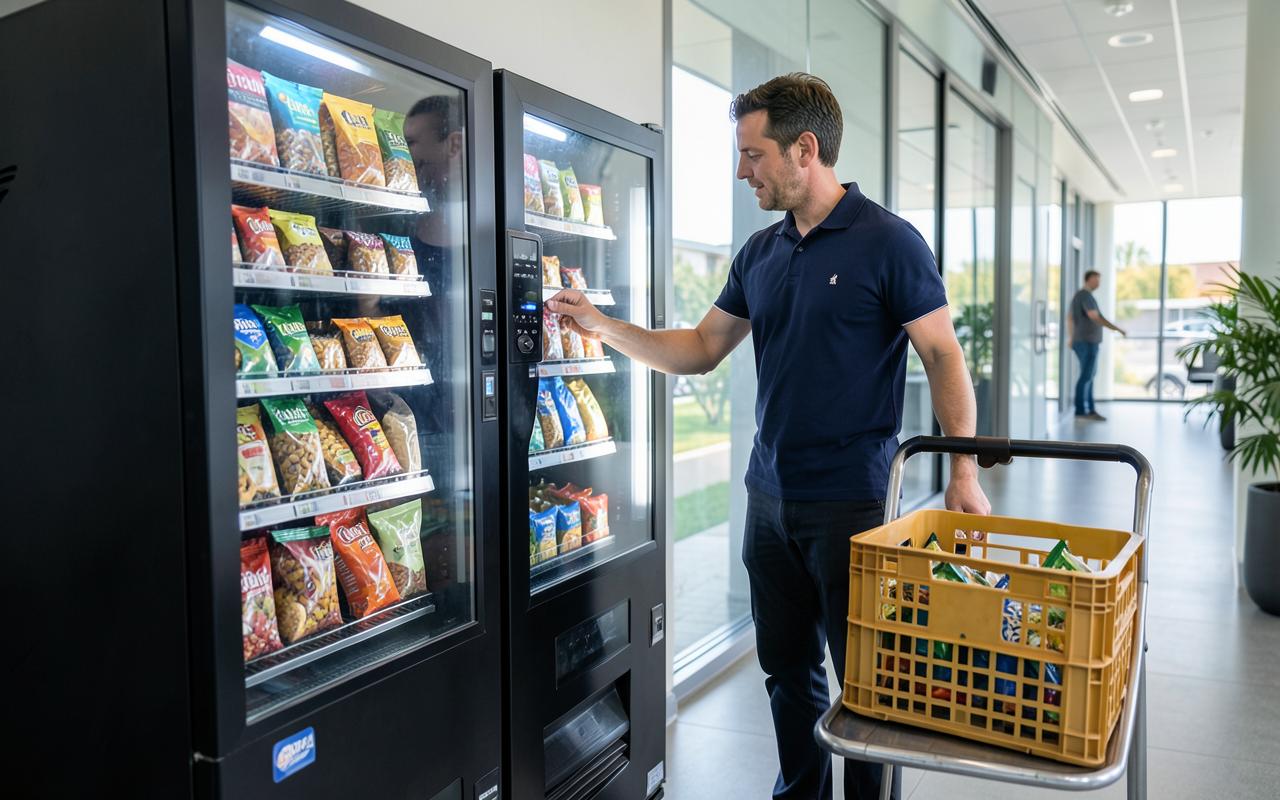
Exposure two: your machines trade unattended
An unattended machine is a small, unsupervised shop. Product liability answers illness or injury caused by what it dispensed; public liability answers a customer hurt by the machine itself; property cover answers vandalism, theft, water damage and power surges to the machine, its stock and its cash float.
Operators running refrigerated or frozen units should confirm that refrigeration breakdown and consequent stock spoilage are included, because a compressor failure over a long weekend is a far more common loss than a headline injury claim.
Exposure three: people and vehicles
The moment you employ restocking help, workers compensation becomes compulsory in your state or territory. If you use contractors, check whether they hold their own cover — if they do not, they may be deemed your workers.
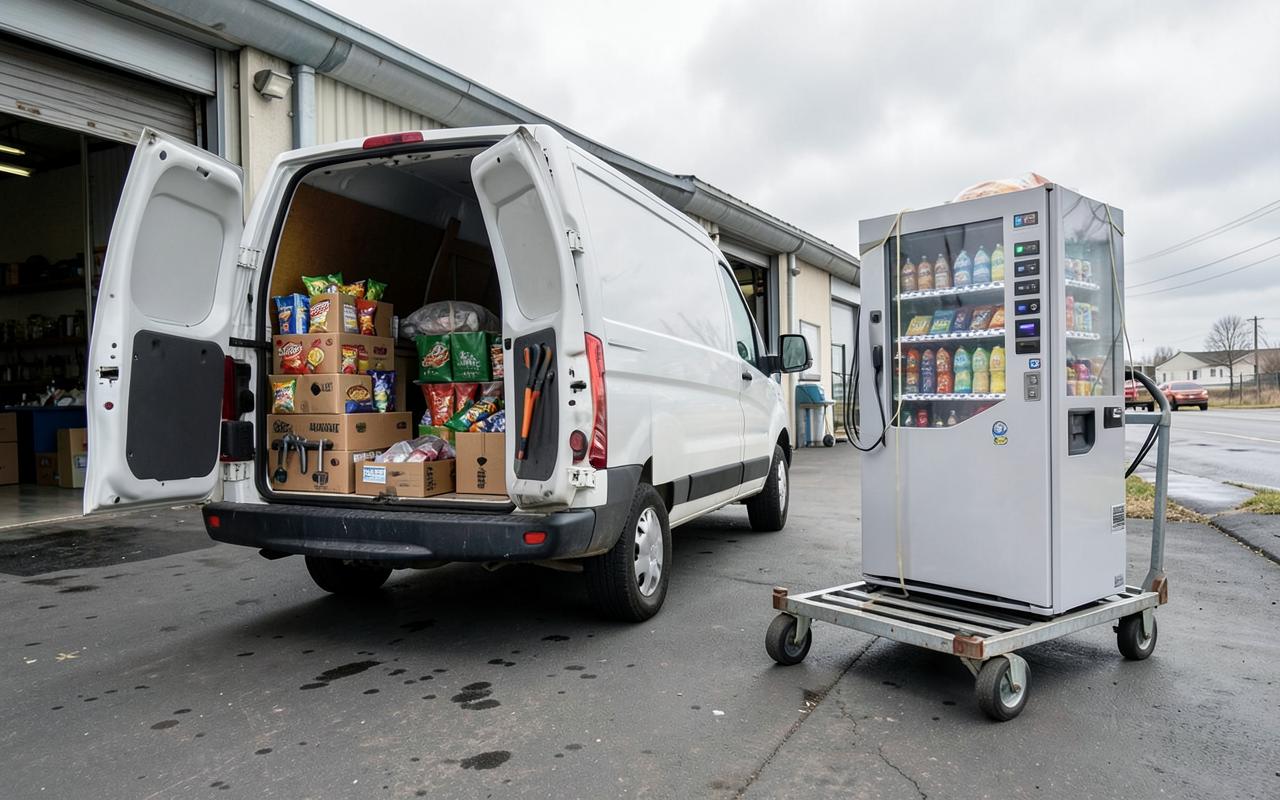
Your service vehicle needs commercial motor cover, and the stock and tools inside it need to be listed somewhere: either on the vehicle policy or under portable equipment and goods-in-transit cover.
- Workers compensation — compulsory once you employ anyone
- Commercial motor cover for the restocking vehicle
- Tools and portable equipment carried in the vehicle
- Goods in transit for stock and relocated machines
Choosing the right liability limit
Small private sites accept $10 million. Shopping centres, schools, universities, hospitals, government buildings and large corporate towers want $20 million, and that is now the practical standard for any operator who wants to tender for tier-one placements.
The premium step from $10 million to $20 million is usually modest, so most operators simply hold the higher limit and stop re-issuing certificates every time they win a bigger site.
What to have ready before quoting
Business insurance for vending machine operators quotes quickly when you bring the numbers with you.
- ABN and trading name
- Estimated annual turnover for the coming twelve months
- Machine count and mix — snack, drink, combo, coffee, food
- States and territories you place machines in
- Liability limit your largest site requires
- Total replacement value of machines, plus stock and cash floats
- Whether any machines are financed, and the finance provider's details
Claims: what to do in the first hour
Photograph the scene, the machine and any product involved before anything is moved. Record the site name, the time, and the details of anyone injured or any witness. Do not admit liability or agree to pay anything on the spot — that decision belongs to the insurer.
Notify the insurer or broker the same day, even for a minor incident. Late notification is one of the few things that genuinely damages an otherwise valid claim.
Twenty years on the road, in one process
This site was built by people who have spent more than twenty years in vending, because sourcing cover quickly is the part of the job nobody explains. Complete the short assessment and your details go to our licensed partner, BizCover, who can compare insurers and issue your certificate of currency. vendingmachineinsurance.com.au is a referral partner, not an insurer. Any information here is general only and does not consider your objectives, financial situation or needs.
A practical annual routine for operators
Operators who keep cover tidy tend to follow the same simple rhythm. Once a month, walk the route with a checklist: anchoring, glass, flaps, leaks, temperature logs and payment terminals. Photograph anything you repair, because that photo record is what supports a claim and what impresses an underwriter at renewal.
Once a quarter, reconcile the machine list. Machines get moved, retired, sold and added, and an out-of-date schedule is the most common reason a property claim is paid at less than the operator expected. Add new machines to the declared value as soon as they are placed rather than at renewal.
Once a year, a month before renewal, re-estimate turnover for the coming twelve months, re-check the limits your largest contracts require, confirm your employment position for workers compensation, and re-issue certificates where a site's requirement has moved from ten million to twenty million dollars.
Working with a licensed provider
We are a referral service, not an insurer or a broker, so the policy conversation happens with a licensed provider. That matters for you in a good way: the licensed provider is the party who can compare insurers, explain the wording, arrange endorsements and handle the claim, and the party regulated to do so.
Our role is to make the handoff fast and accurate. The assessment on this site captures the seven pieces of information underwriters ask for first, so the licensed provider is not chasing you for basics before they can quote.
Estimated cost of business insurance for vending machine operators
Operators always ask what business insurance for vending machine operators actually costs. The ranges below are estimated indicative annual premiums we see quoted in the Australian market for owner-operator routes. Read the pricing disclaimer underneath — these are ballpark figures to budget against, not a quote.
| Profile | Typical route | Cover | Estimated range |
|---|---|---|---|
| Starter route | 1-5 machines, turnover under $100k, sealed snack and drink units | $10M public & product liability | Est. $450 - $800 per year |
| Growing route | 6-20 machines, turnover $100k-$300k, some chilled or coffee units | $20M public & product liability | Est. $700 - $1,400 per year |
| Established route | 21-50 machines, turnover $300k-$750k, mixed fleet, one or two staff | $20M public & product liability | Est. $1,200 - $2,600 per year |
| Machine & equipment cover | Property cover on the machines, stock and cash floats | Declared replacement value | Est. $25 - $70 per machine per year |
| Add-ons | Commercial motor for the service van; workers compensation once you employ | Varies by state scheme | Est. $900 - $2,000 (van) plus state premium |
- Turnover moves liability premium far more than machine count does.
- A clean three-year claims record is the strongest discount lever you control.
- Choosing a higher excess lowers premium but raises what you fund on a claim.
- Hot beverage, fresh food and street-front placements rate higher than sealed snack units in supervised offices.
Estimated pricing only — not a quote
Important: every figure on this page is an estimated indicative range based on typical Australian market pricing for vending operators at the time of writing. It is not a quote, not an offer of cover, and not personal advice. Your actual premium is set solely by the insurer once they assess your turnover, machine count and value, machine mix, site types, claims history, excess and the state you operate in — and it can be materially higher or lower than the ranges shown. Premiums also change without notice as insurers reprice. The only accurate price is the one a licensed provider quotes you in writing. Read the relevant Product Disclosure Statement and Target Market Determination before deciding on any policy.
Public liability - what is actually covered
The core section of an operator policy is combined public and product liability, normally written with a $10 million or $20 million limit for any one occurrence. It responds to compensation a third party is legally entitled to, plus the legal costs of defending the claim, which in Australia routinely run into tens of thousands of dollars even where you are found not at fault.
- Bodily injury to a customer, staff member of the site, or passer-by
- Damage to the site owner's floors, walls, shopfront, plumbing or electrical
- Injury caused while you install, relocate, restock or repair a machine
- Legal defence costs, investigation costs and court attendance
- Product liability for illness or injury from the food and drink dispensed
What is typically excluded
Every Australian liability wording carries exclusions, and knowing them is part of running the route properly. Deliberate acts, wear and tear on your own machines, faults in the machine you sold rather than harm it caused, contractual liability you assumed beyond the policy, and injury to your own employees (which belongs to workers compensation) are the usual carve-outs. Confirm each one with the licensed provider against the sites you actually service.
Frequently asked questions
- How fast can an operator get a certificate of currency?
- Most Australian operators can be quoted, bound and issued a certificate of currency the same business day, provided turnover, machine count and the required liability limit are ready at the time of application.
- Are financed machines insured differently?
- The cover is the same, but the finance provider will normally require property cover noting their interest in the equipment before drawdown. Tell the insurer the machines are financed so the certificate is issued correctly the first time.
- Does business insurance for vending machine operators cover cash in the machine?
- Cash floats can be covered, but usually up to a specified sub-limit per machine and per location. Declare a realistic float amount rather than assuming full cash cover is automatic.
Get quoted for business insurance for vending machine operators
Three short steps, about three minutes. We pass your answers to our licensed partner, BizCover, who can issue your certificate of currency — usually the same day. Prefer to talk it through? Call 0412 025 552.
Keep reading
VendingMachineInsurance.com.au (ABN 63 099 686 608) is a referral partner. We connect business operators with licensed Australian insurance providers, and we may receive a referral fee. We do not issue policies and we do not provide personal financial or insurance advice. Any information on this site is general only, does not take your objectives, financial situation or needs into account. Always read the relevant Product Disclosure Statement and Target Market Determination before deciding on a policy.