Do I need it?
Buy vending machine insurance: do I need it, why, and how?
The short answers: yes in practice, because a single injury claim can outlast the business, and it takes about three minutes to arrange.
Buy vending machine insurance before you place your first machine, not after your first incident — that is the honest answer to the question most Australian operators ask. No statute forces you to hold public liability cover, yet almost every site owner in the country makes it a condition of the placement agreement, and a single injury or contamination claim can cost more than an entire small route earns in a decade. This page answers do I need it, why it matters, and exactly how to arrange it.
Do I need it?
In practice, yes. There is no Australian law requiring a vending operator to hold public liability insurance, but there is a commercial reality: shopping centres, schools, gyms, clubs, hospitals, councils and corporate landlords will not accept a machine without a certificate of currency, usually for $10 million or $20 million with product liability included.
So the question is not really legal, it is practical. Without cover you cannot win sites, cannot keep sites that audit their contractors, and cannot fund a defence if someone decides your machine caused their injury.
Why it matters: it saves you from being sued
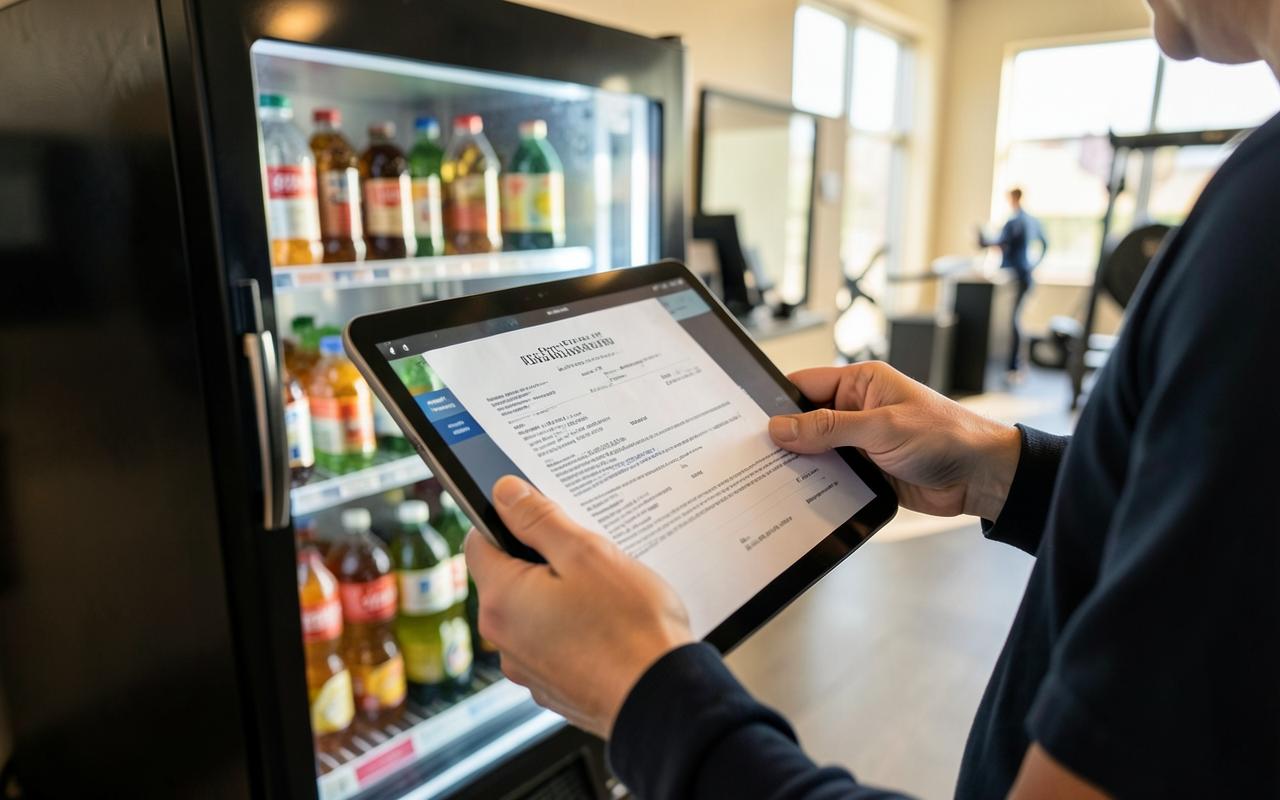
Liability claims in vending are not exotic. A machine tips while a customer rocks it. A child is scalded by a hot beverage unit. Someone slips in water leaking from a chiller. A packaged product is spoiled after a compressor failure and a customer becomes unwell. Any of those can end in a claim against the operator, because the operator controls the machine and the product.
Even a claim you eventually defeat costs money to defend. Legal costs, expert reports and lost trading days accumulate long before liability is decided. Insurance is the mechanism that pays those costs and the settlement, and keeps the business trading while the claim runs.
- Injury claims from machines tipping, trapping, scalding or leaking
- Illness claims from spoiled, contaminated or mislabelled product
- Damage you cause to a client's premises during install or service
- Legal defence costs, even where you are ultimately not at fault
Why it is an important part of doing business
Insurance is not only protection, it is a sales tool. Being able to email a current certificate of currency within minutes of a centre manager asking is often what wins the site — operators who need a week to find cover simply lose the placement to whoever answered first.
It also protects the assets. Machines are capital, and property cover means vandalism, theft, water damage or a power surge does not force you to fund a replacement out of cash flow.
How to buy vending machine insurance
The process is short if you prepare seven pieces of information. Most operators complete it in a single sitting and hold a certificate the same day.
- Your ABN and trading name
- Estimated annual turnover for the next twelve months
- Number of machines and their types — snack, drink, combo, coffee, food
- States and territories you place machines in
- The liability limit your largest site demands, usually $10M or $20M
- Total replacement value of the machines, plus stock and cash floats
- Whether machines are financed, and the finance provider's details
What happens after you submit
Complete the three-step assessment on this site and your answers go to our licensed partner, BizCover, who compares Australian business insurers and can bind cover and issue your certificate of currency. You keep dealing with a licensed insurance provider for the policy itself — vendingmachineinsurance.com.au is a referral partner, not an insurer.
We do not provide personal financial or insurance advice. Anything on this site is general information only and does not take your objectives, financial situation or needs into account, so read the relevant Product Disclosure Statement and Target Market Determination before deciding.
How much should I budget?
Price moves with turnover, machine count and value, machine mix, placement types and claims history. A small route with sealed snack machines and modest turnover sits at the bottom of the range; a mixed fleet of hot beverage and refrigerated units in high-traffic public locations sits higher. Moving from a $10 million to a $20 million limit usually adds a modest amount rather than doubling the premium.
Treat the premium as a cost of placement, not an optional extra: one lost tier-one site typically costs more in lost annual margin than the policy costs in a year.
Before you sign the placement agreement
Read the indemnity clause and the insurance clause together. Confirm the limit the agreement requires, whether the site owner must be noted on your certificate, and how long cover must continue after the agreement ends. Then make sure your policy actually says those things — a signed agreement you cannot satisfy is a bigger problem than no agreement at all.
The order to do things in
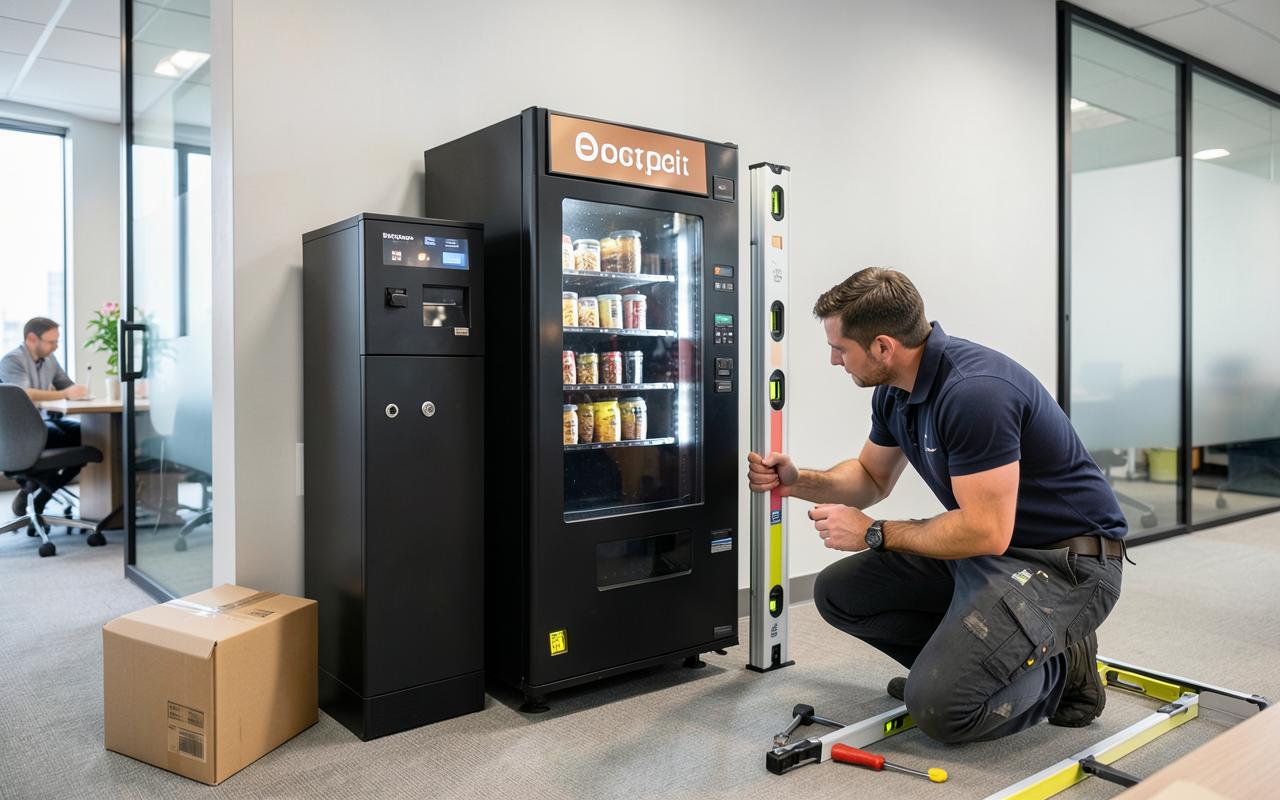
Operators who get this right follow a simple sequence. First, ask the site what limit and endorsements the placement agreement requires — that determines the policy, not the other way around. Second, arrange the cover and get the certificate issued in the exact legal name that will appear on the agreement. Third, sign the agreement. Fourth, install the machine.
Doing it in the other order is where the trouble starts. Signing first and insuring later means you carry a contractual promise you cannot yet satisfy, and installing before the certificate is issued means a site audit can pull your machine out at your cost.
Keep every certificate in one folder, named by site and expiry date. When a centre manager emails at 4pm asking for current evidence before a peak trading week, the operator who can answer in two minutes keeps the site.
Estimated cost of buy vending machine insurance
Before you buy vending machine insurance it helps to know the likely spend. The figures below are estimated indicative annual premium ranges for Australian vending operators, gathered from typical market pricing at the time of writing. Treat them as a budget guide only and read the pricing disclaimer that follows.
| Profile | Typical route | Cover | Estimated range |
|---|---|---|---|
| Just starting out | 1-3 machines, part-time route, turnover under $60k | $10M public & product liability | Est. $450 - $750 per year |
| Typical small route | 4-15 machines, turnover $60k-$250k, snack, drink and combo units | $20M public & product liability | Est. $650 - $1,300 per year |
| Coffee & fresh food route | Hot beverage and perishable units in public locations | $20M with product liability emphasised | Est. $900 - $1,900 per year |
| Adding machine cover | Theft, vandalism, accidental damage, transit and stock | Declared replacement value | Est. $25 - $70 per machine per year |
- Most small operators land somewhere between $12 and $30 a week all-in - typically less than the margin on a single good site.
- Financed machines usually need property cover noting the finance provider, which is part of the property premium rather than an extra policy.
- Paying annually rather than monthly normally avoids an instalment loading of a few per cent.
Estimated pricing only — not a quote
Important: every figure on this page is an estimated indicative range based on typical Australian market pricing for vending operators at the time of writing. It is not a quote, not an offer of cover, and not personal advice. Your actual premium is set solely by the insurer once they assess your turnover, machine count and value, machine mix, site types, claims history, excess and the state you operate in — and it can be materially higher or lower than the ranges shown. Premiums also change without notice as insurers reprice. The only accurate price is the one a licensed provider quotes you in writing. Read the relevant Product Disclosure Statement and Target Market Determination before deciding on any policy.
Exactly what you are buying
When you buy vending machine insurance in Australia you are usually buying two sections under one business policy. Knowing what sits inside each one stops you paying for cover twice or discovering a gap at claim time.
- Public liability: compensation and legal costs when a third party is injured or their property is damaged by your machine or your work
- Product liability: illness, allergic reaction or injury caused by the food, drink or coffee the machine dispensed
- Machine and equipment cover: vandalism, forced entry, theft of the machine, stock or cash float, accidental and impact damage
- Refrigeration breakdown and stock spoilage on chilled and frozen units
- Transit cover while a machine is moved between sites or to the workshop
- Optional extras: business interruption, commercial motor, portable tools, cyber for cashless terminals
What it does not cover
No policy covers everything. Expect exclusions for deliberate damage, gradual wear and tear on your own machines, mechanical fault in the machine itself (that is a warranty or maintenance issue), unexplained stock shortage, cash beyond the declared float sub-limit, and injury to your own employees, which belongs to workers compensation. Ask the licensed provider to confirm these against your route before you bind.
Frequently asked questions
- Do I legally have to buy vending machine insurance in Australia?
- No single law requires it, but site owners, centre managers, schools and councils make evidence of public liability cover a condition of placing a machine. Without a certificate of currency you effectively cannot operate in commercial locations.
- How quickly can I buy cover and get a certificate?
- Usually the same business day. Have your ABN, turnover estimate, machine count and mix, states of operation and required liability limit ready and the application takes a few minutes.
- What happens if someone sues me and I have no insurance?
- You fund the legal defence and any settlement yourself, and you are likely in breach of the placement agreement as well. For most small routes that combination is unrecoverable, which is why cover is arranged before the first machine is placed.
Get quoted for buy vending machine insurance
Three short steps, about three minutes. We pass your answers to our licensed partner, BizCover, who can issue your certificate of currency — usually the same day. Prefer to talk it through? Call 0412 025 552.
Keep reading
VendingMachineInsurance.com.au (ABN 63 099 686 608) is a referral partner. We connect business operators with licensed Australian insurance providers, and we may receive a referral fee. We do not issue policies and we do not provide personal financial or insurance advice. Any information on this site is general only, does not take your objectives, financial situation or needs into account. Always read the relevant Product Disclosure Statement and Target Market Determination before deciding on a policy.