Commercial cover
Commercial insurance for vending machine businesses
For routes with multiple sites, staff, financed equipment or national contracts — how to structure cover that satisfies every counterparty.
Commercial insurance for vending machine businesses is the step up from a single liability certificate to a program that satisfies landlords, lenders, franchisors and corporate clients at the same time. Once a route reaches twenty, fifty or a few hundred machines, the questions change: not just what is covered, but whether the limits, endorsements and named interests match every contract you have signed. This guide sets out how Australian operators structure that program.
The commercial program at a glance
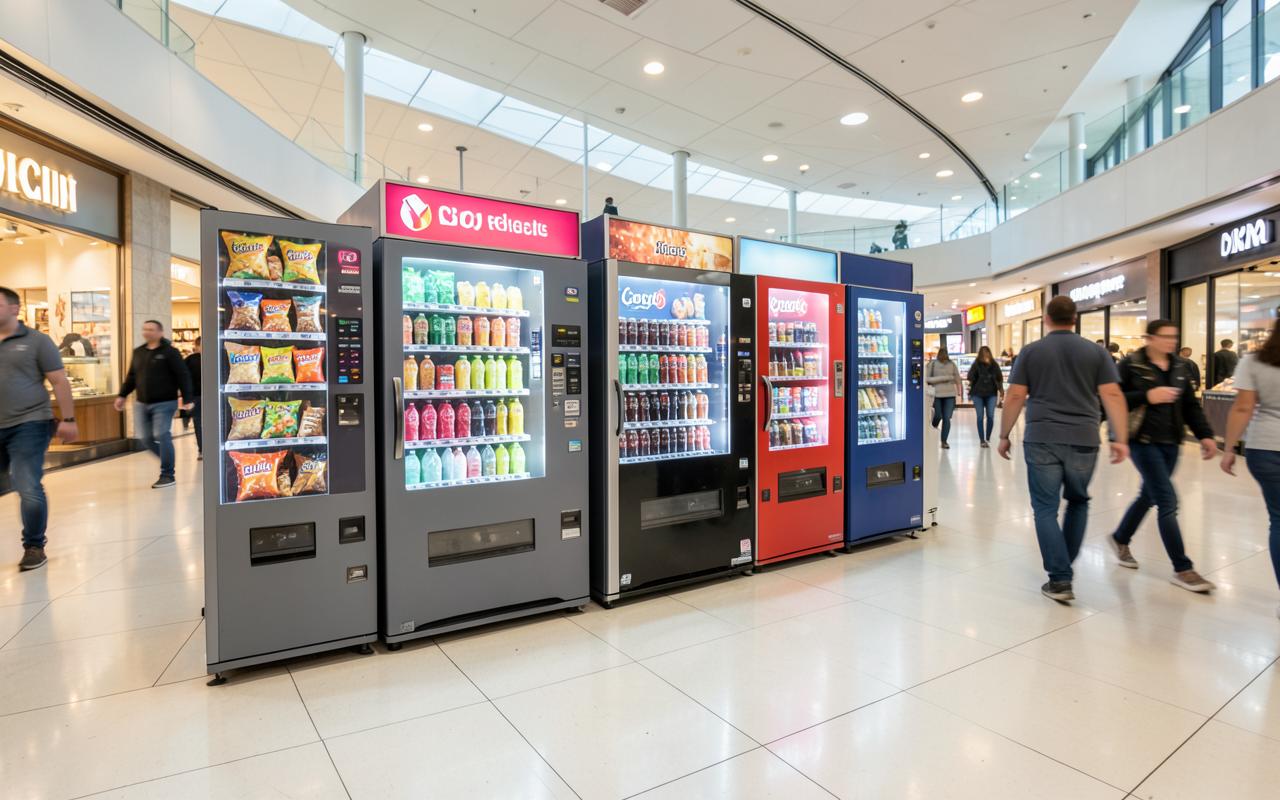
A mature vending business normally runs five or six lines of cover, each answering a different counterparty's demand.
- Combined public and product liability at $20 million, the tier-one standard
- Commercial property cover for machines, stock, cash and payment terminals
- Business interruption for lost route income after an insured event
- Workers compensation in each state or territory where you employ
- Commercial motor for the service fleet, plus goods in transit
- Management liability and cyber where the business carries those exposures
Matching cover to contracts
Corporate and government placement agreements often specify more than a limit. Common requirements include principal's indemnity extensions, a waiver of subrogation, the site owner noted as an interested party, and a commitment to maintain cover for a period after the agreement ends.
Build a simple contract register: site, required limit, required endorsements, certificate expiry. At renewal you then hand the broker one list instead of re-reading forty agreements, and no site is left with a certificate that no longer matches its contract.
Business interruption for route income
Property cover replaces a damaged machine. Business interruption replaces the income that machine would have earned while it is being replaced, and can extend to income lost when a client's premises is closed by an insured event.
For a route with concentrated income — a handful of high-earning sites carrying most of the margin — business interruption is often the difference between a bad quarter and a business that cannot fund its restock cycle.
Payment systems, data and cyber exposure
Cashless readers, app-based loyalty and telemetry mean a modern route processes card data and customer information. That creates a genuine cyber and privacy exposure that a traditional property policy does not answer: a compromised payment terminal, a ransomware event on the route management software, or a notifiable data breach under Australian privacy law.
Cyber cover is optional, but it should be a conscious decision rather than an oversight once cashless payment is a material share of your revenue.
Growth, acquisitions and machine finance
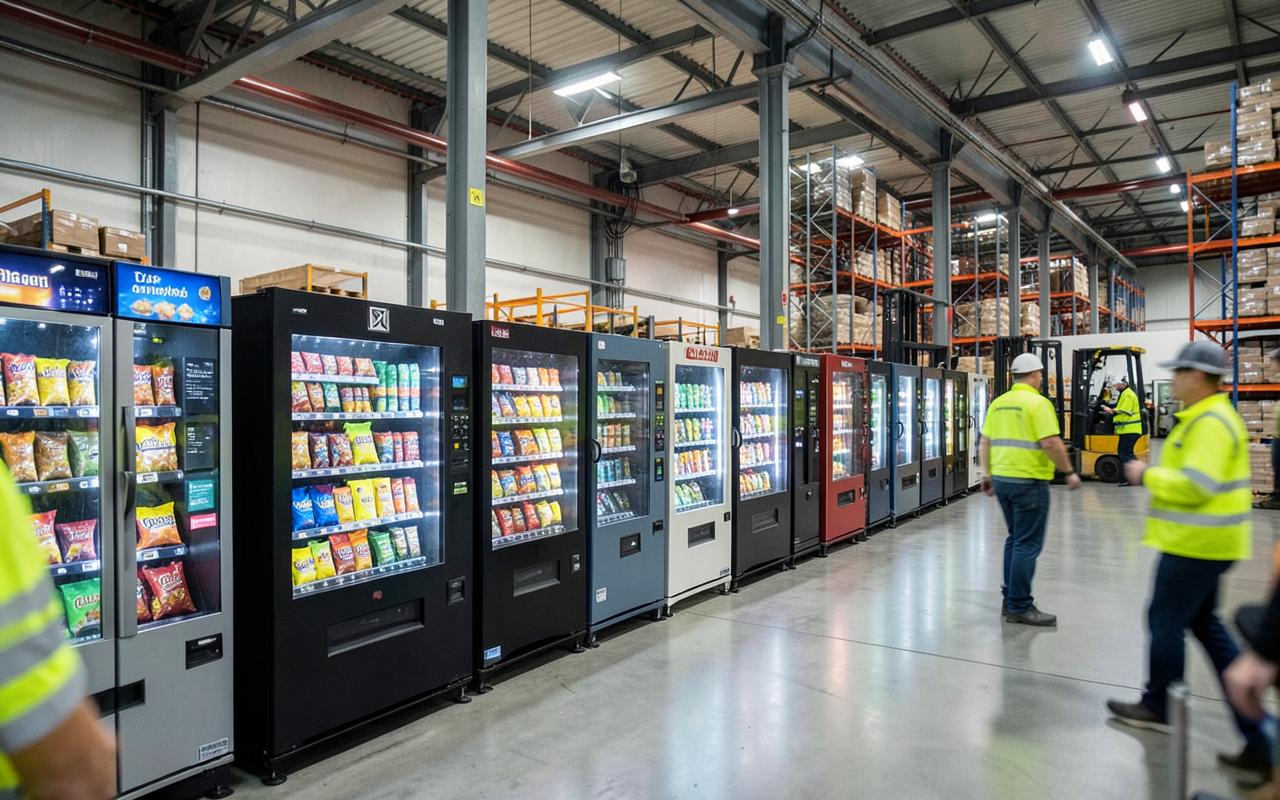
Buying another operator's route changes your risk profile overnight: new sites, new machine types, new turnover. Tell the insurer before settlement, not at renewal, so the acquired machines are covered from day one and the certificate limits match the new sites' agreements.
Financed or leased equipment normally requires the lender's interest noted on the property policy. Keep the finance schedule and the insurance schedule reconciled — mismatches are the most common reason a drawdown is delayed.
What drives commercial premiums
Turnover leads liability pricing. Declared replacement value leads property pricing. Beyond those, insurers look at machine mix, the profile of your placement locations, geographic spread, claims history over three to five years, and the quality of your risk documentation.
Operators who present temperature logs, service records, placement agreements and an incident register consistently receive better terms than operators who present a machine count and a turnover figure alone.
Reviewing the program each year
Set a fixed annual review a month before renewal. Re-declare turnover, re-value the fleet, update the state-by-state employment position, confirm which contracts changed, and re-check that every certificate on issue still shows the limit its site requires.
When you are ready to compare the market, complete the assessment on this site and your details go to our licensed partner, BizCover. vendingmachineinsurance.com.au is a referral partner, not an insurer. Read the relevant Product Disclosure Statement and Target Market Determination before deciding on a policy.
Documenting risk so underwriters price you properly
Commercial underwriters reward evidence. Two operators with identical turnover and machine counts can receive materially different terms because one arrives with documentation and the other arrives with an estimate. The documentation does not need to be elaborate — it needs to exist and be current.
Build a short risk pack you can attach to every submission: a machine schedule with type, age, location and replacement value; a summary of placement locations by category (shopping centre, school, gym, factory, street-front); temperature monitoring practice for chilled and frozen units; an incident register showing what happened and what you changed; and copies of your standard placement agreement and installation method statement.
That pack does a second job at claim time. When an insurer asks what the machine was worth, where it was placed and how it was maintained, the answers already exist in writing rather than being reconstructed from memory months later.
Who to involve, and when
Insurance decisions in a commercial route touch three other parties: your accountant, who owns the turnover figure; your lender, who owns the requirement to note their interest in financed machines; and your largest clients, who own the contract clauses your policy must satisfy. Getting those three aligned before renewal removes almost every last-minute problem.
We are a referral partner rather than a broker, so the technical structuring is done by the licensed provider we hand you to. Our contribution is speed and accuracy at the front of the process, which for a growing route is usually where the time is lost.
Estimated cost of commercial insurance for vending machine businesses
Commercial insurance for vending machine businesses is priced as a program, not a single policy, so budget line by line. The estimated indicative annual ranges below reflect typical Australian pricing for multi-site routes. The pricing disclaimer underneath applies to every figure.
| Profile | Typical route | Cover | Estimated range |
|---|---|---|---|
| Combined liability | Public & product liability, 20-100 machines, turnover $300k-$1.5M | $20M limit, site owners noted | Est. $1,200 - $3,500 per year |
| Machine, stock & equipment | Declared fleet replacement value, vandalism, theft, transit, refrigeration breakdown | Declared value schedule | Est. $25 - $70 per machine per year |
| Business interruption | Lost route income after an insured property loss or major site event | 12-month indemnity period | Est. $600 - $2,500 per year |
| Commercial motor fleet | Two to five service vans carrying stock and tools | Market value or agreed value | Est. $900 - $2,000 per vehicle |
| Cyber & payment systems | Cashless terminals, telemetry platform, customer payment data | $250k-$1M limit | Est. $700 - $2,500 per year |
| Management liability | Company directors, employment practices, statutory fines cover | $1M-$2M limit | Est. $900 - $2,800 per year |
- Workers compensation sits outside these figures and is set by your state or territory scheme.
- National contracts and government tenders often require $20M and specific named-interest endorsements, which can nudge liability pricing up.
- Consolidating all lines with one licensed provider is usually cheaper than buying them piecemeal, and gives one renewal date.
Estimated pricing only — not a quote
Important: every figure on this page is an estimated indicative range based on typical Australian market pricing for vending operators at the time of writing. It is not a quote, not an offer of cover, and not personal advice. Your actual premium is set solely by the insurer once they assess your turnover, machine count and value, machine mix, site types, claims history, excess and the state you operate in — and it can be materially higher or lower than the ranges shown. Premiums also change without notice as insurers reprice. The only accurate price is the one a licensed provider quotes you in writing. Read the relevant Product Disclosure Statement and Target Market Determination before deciding on any policy.
What each line of the program actually covers
A commercial program is deliberately layered so that each counterparty - landlord, lender, corporate client, employee - is answered by a specific section rather than by hope.
- Combined public and product liability: third-party injury, third-party property damage, harm from dispensed product, and legal defence costs
- Business property and portable equipment: vandalism, theft, malicious damage, impact, fire, water damage, power surge, and machines in transit between sites
- Stock and refrigeration breakdown: compressor failure and consequent spoilage of chilled or frozen product
- Business interruption: route income lost while machines or a key site are out of action after an insured event
- Commercial motor and goods in transit: the vans, the tools and the stock inside them
- Cyber and payment systems: a breach or outage affecting cashless terminals and telemetry
- Management liability: directors, employment practices and statutory investigation costs as the business grows
Endorsements commercial clients ask for by name
Larger counterparties rarely just ask for insurance - they ask for specific wording. Common requests are the principal noted as an interested party, a waiver of subrogation in the site owner's favour, a cross-liability or severability clause where multiple entities are insured, thirty days notice of cancellation to the site owner, and a certificate issued in the exact legal entity name on the contract. Give the licensed provider the contract wording up front so the endorsements are on the policy before the first machine lands.
Frequently asked questions
- What limit does commercial insurance for vending machine businesses usually carry?
- Twenty million dollars of combined public and product liability is the practical standard for Australian operators placing machines in shopping centres, schools, hospitals, universities and government buildings. Ten million is generally only enough for smaller private sites.
- Do I need business interruption cover for a vending route?
- It is optional, but valuable when a small number of sites carry most of your income. Property cover replaces the machine; business interruption replaces the earnings lost while it is out of service.
- How do I satisfy a contract that requires the site owner to be noted on my policy?
- Ask the insurer to note the site owner as an interested party and issue a certificate showing it. Do this before installation — retro-fitting endorsements mid-term takes longer and can hold up a placement.
Get quoted for commercial insurance for vending machine businesses
Three short steps, about three minutes. We pass your answers to our licensed partner, BizCover, who can issue your certificate of currency — usually the same day. Prefer to talk it through? Call 0412 025 552.
Keep reading
VendingMachineInsurance.com.au (ABN 63 099 686 608) is a referral partner. We connect business operators with licensed Australian insurance providers, and we may receive a referral fee. We do not issue policies and we do not provide personal financial or insurance advice. Any information on this site is general only, does not take your objectives, financial situation or needs into account. Always read the relevant Product Disclosure Statement and Target Market Determination before deciding on a policy.